
The Suburb Without a Past
Let the Right One InThis flow traces Blackeberg as a planned setting whose apparent order proves unable to prevent fear, secrecy, and violence.
increasing Bearing strength in each event
 decreasing
Bearing strength in each eventdecreasingA Planned Beginning

A Planned Beginning
Homes without history
Blackeberg is built as a modern suburb, and families move into finished apartments rather than into a place shaped gradually by shared memory.
The narrator emphasizes the absence of an organic past. That lack becomes more than scenery: it helps explain why residents are unprepared for old horrors.
A Place Called Good
A Place Called Good
Comfort by design
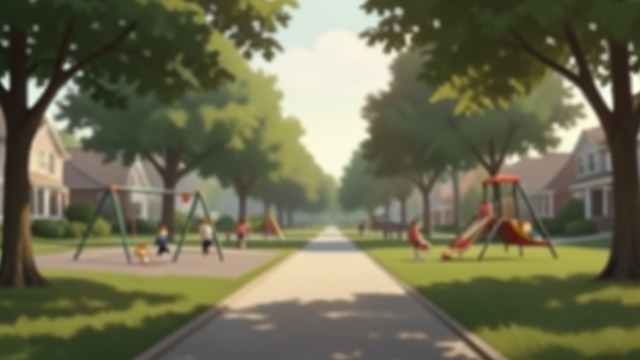
Residents praise Blackeberg as a good place to live, with playgrounds, green space, and pedestrian paths.
The orderly environment creates a promise of safety. The novel later tests that promise against violence occurring in courtyards, forests, and basements.
The First Unsettling Body

The First Unsettling Body
Modernity meets the forest
A boy is killed in a clearing near the suburb, and the police investigation enters the familiar landscape of paths and trees.
The forest is both nearby and outside ordinary neighborhood life. Its darkness exposes how thin the suburb’s sense of security is.
Courtyards Become Stages
Courtyards Become Stages
Violence enters the everyday
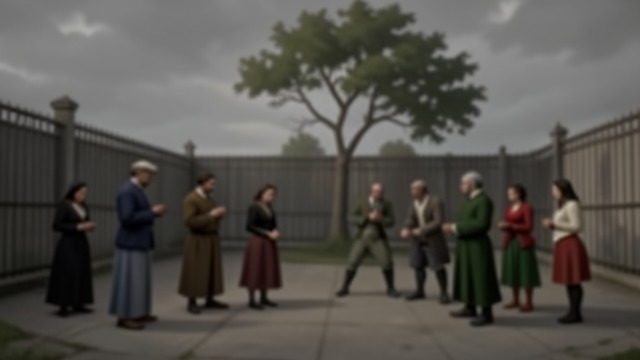
Oskar meets Eli in the courtyard, while residents watch windows, doors, and entrances for signs of danger.
The shared spaces intended for communal life become settings for secrecy and fear. Their design does not make neighbors know one another.
The Town Remains

The Town Remains
Order without understanding
Police tape, newspaper reports, and ordinary routines follow the killings, but residents never receive a complete account of what happened.
Blackeberg’s modern structures continue to function. The unresolved events expose the difference between an orderly place and a place that can explain itself.
1952
Around 1952
Wednesday, October 21, 1981
Late October 1981
After Monday, November 9, 1981
